

In a previous article we talked about how important it is to tailor our communication to the culture we want to communicate to, and we also provided an introduction to some great examples that tell us what NOT to do!
Now, instead, let’s look a bit at those who do things with their heads.
The title of the article originally should have been “Hofstede and McDonald, a love story” but I thought no one would get it; however, the theme of this article remains that: to try to understand how McDonald has applied Hofstede’s 5 dimensions principles to adapt its online communication to the many cultures and countries to which it offers its products.
Please note that in the previous sentence I wrote “ADAPTING COMMUNICATION” not “translating the site”! These are two very different concepts.
Hofstede’s 5 dimensions
Review: what are Hofstede’s 5 dimensions? It is a working model that uses 5 points to “measure” some critical issues to consider when talking to different cultures.
The 5 dimensions, in a nutshell, are as follows:
- Power Distance – the perceived distance between those within a country who hold power and those who are subject to it
- Individualism vs collectivism – the orientation of citizens toward individualism or collectivism
- Masculinity vs femininity – The “masculine” or “feminine” mental inclination of society
- Uncertainty avoidance – Tolerance or intolerance of uncertainty and ambiguity
- Time orientation – The attitude of looking at the short term or the long term
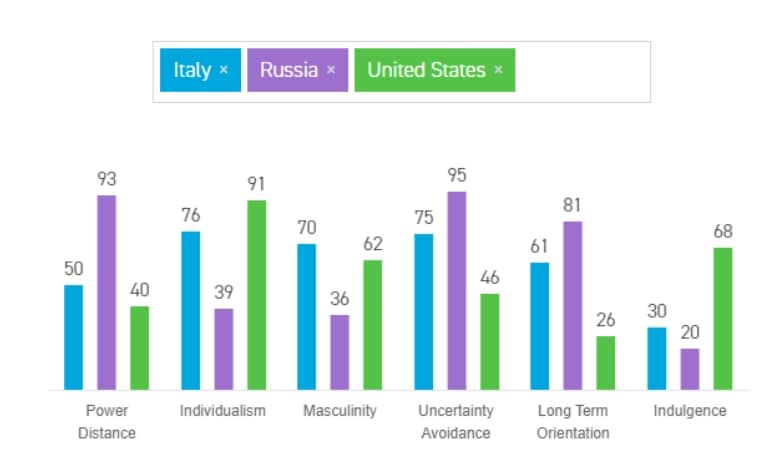
(Above is an example of “measuring” according to Hofstede’s dimensions. Spoiler: we are not all the same)
“Think global, act local.”
It’s one of those mantras so famous in marketing that, in this case, they made McDonald’s. A slogan? Maybe, but the fact is that McDonald succeeds.
Power Distance: the need to be able to decide / the discomfort of having to choose
In Germany, the United States, Australia, the Power Distance is stronger.
To address this audience, an eCommerce must therefore be able to offer added value to users, providing them with all the information they seek, acting as a peer to peer, and showing interest in their needs.
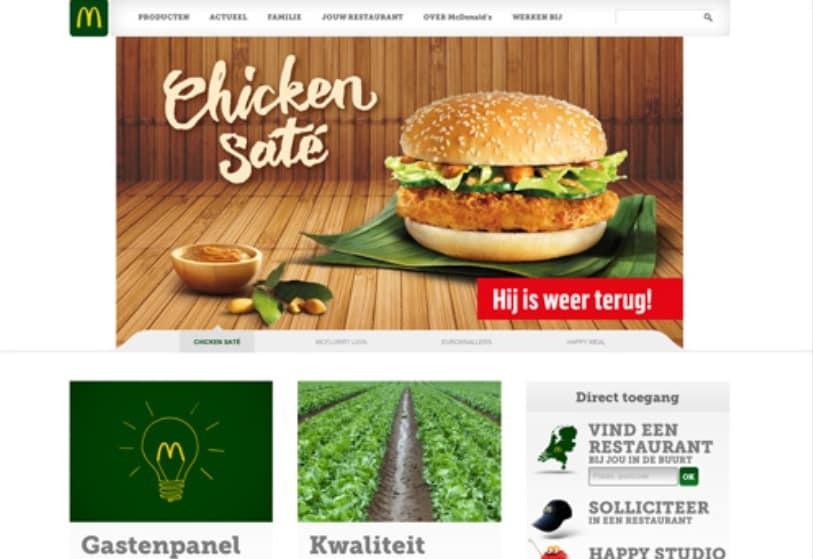
Let’s take McDonald’s Dutch site as an example: as can be seen in the image, we are faced with a portal with a clean, minimalist design that offers the user a lot of information, including in-depth information.
Indeed, it is possible to find out everything there is to know about the brand’s ingredients, products, restaurants, and sustainability. The structure of the site is designed to offer value to the user, seeking his or her trust. Everything the user decides to do on that site will be done by his or her own will.
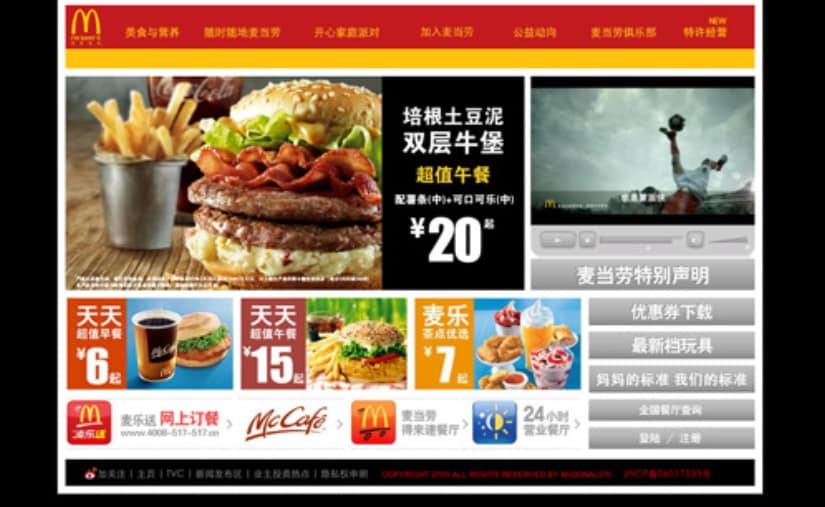
In countries such as Russia, China, and India, on the other hand, audiences expect power to be distributed unequally. In these countries, they prefer interactive and highly engaging sites.
McDonald’s Chinese site is a highly commercial-looking portal, characterized by strong contrasts and many colors. The focus is on the products.
Therefore, one should not seek their consent by offering information, but instead be careful to put forward their offerings in a very clear and distraction-free way.
Individualism or Collectivism? Thinking of oneself first or of others?
In more individualistic societies, such as the United States, Canada, Northern Europe, Italy, Britain, and Australia, everyone tends to take care of himself and his family. Decisions are made independently, according to one’s personal needs.
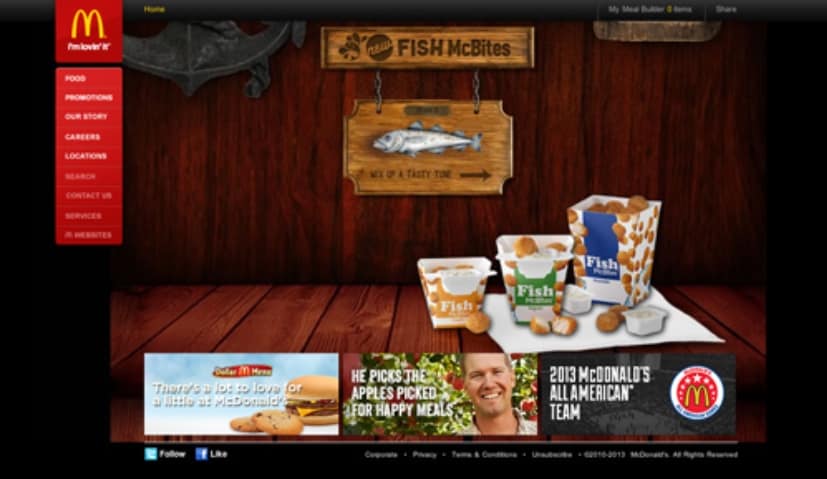
Web designers and copywriters absolutely must take the user’s personal needs into account.
“Start the day with a smile”
“Enjoy an unforgettable breakfast”
“Appetizing daily offers, tailor-made for you.”
In societies more devoted to collectivism, such as Mexico, Turkey, and some East African countries, the tendency is to do more for others. Collectivists like to be able to check out reviews from other consumers and share their shopping experience on social channels.
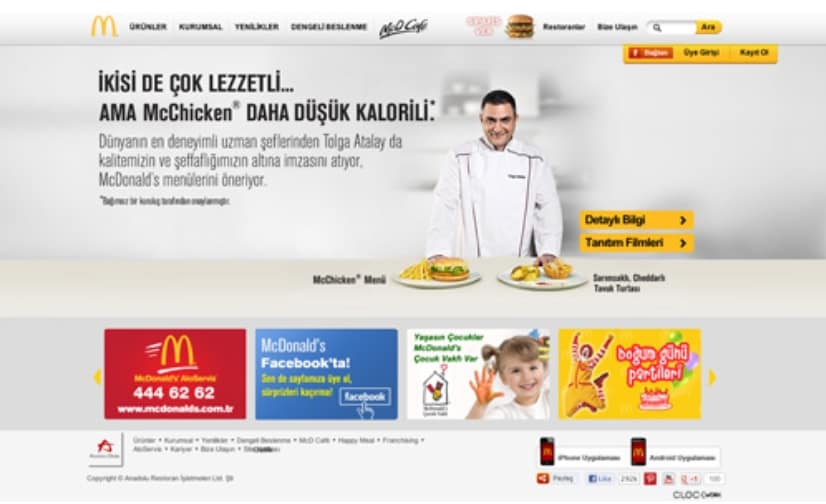
McDonald’s Turkish site emphasizes the importance of the social aspect. The emphasis is on social networks, the centrality of the “community” of users, and the image of the chef as a reference point for users.
More “masculine” or “feminine” approach?
Societies that are more masculine (Saudi Arabia, China, and Japan) are populated by more competitive individuals, driven by ideals such as success, materialism, and heroism.
Societies with a more “feminine” approach, such as Sweden, Norway, and Iceland, are more oriented toward cooperation, modesty, caring for the weak, and general improvement of the quality of life.
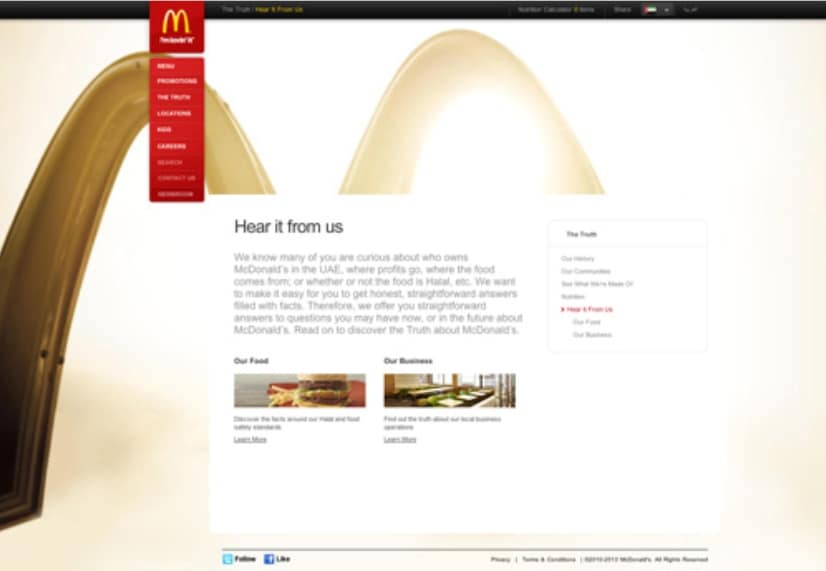
Il sito di McDonald’s utilizzato in Arabia Saudita è stato progettato per soddisfare utenti molto critici.
L’esperienza del marchio nel settore della ristorazione è enfatizzata fin dall’inizio, così come tutti gli aspetti più importanti dell’aspetto aziendale del marchio: chi possiede i punti vendita sauditi? Chi ottiene i profitti? Da dove provengono gli ingredienti?
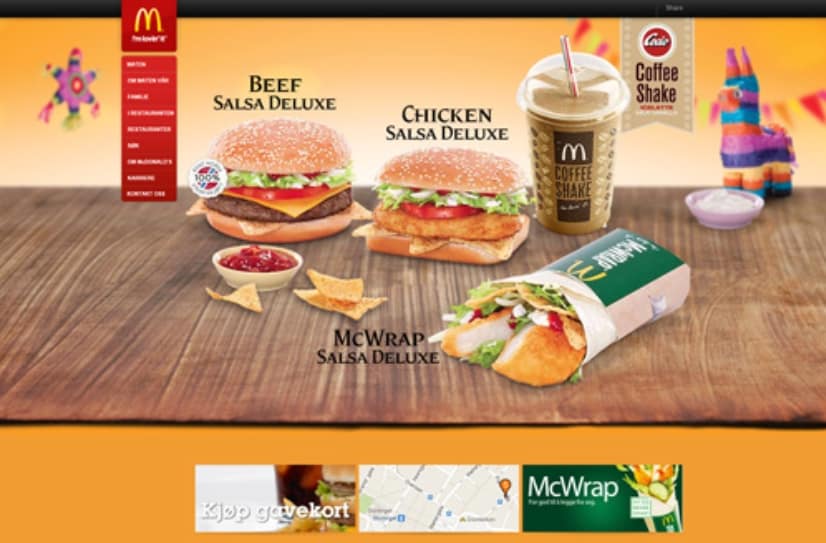
In more distinctly “feminine” countries, the main goal is to avoid conflict at all costs and enjoy life.
The design of McDonald’s Norwegian site is playful and offers a relaxed and fun user experience. The “Contact Us” menu item opens directly to a page containing a contact form for immediate communication with the brand.
Surprises and novelty: to be avoided or welcomed?
There are societies that are not at all comfortable in ambiguous or unfamiliar situations, where the unexpected is just around the corner. This is the case in Greece, Malaysia, Portugal, Russia and Japan. In this case, it is necessary to avoid communication based on anxiety and fear, but to focus on simplicity, clarity and conveying positive emotions. It will be important to reassure the user in any situation that may create anxiety, e.g., make delivery times and costs explicit, include tables with measurements and dimensions, etc.
Other countries, such as Jamaica, Sweden, Denmark, and Norway, have a higher tolerance for ambiguity and risk, so it may be favorable to play up “negative” emotions as well, to encourage immediate user reaction (e.g., countdowns, flash promotions, etc.).

Now and now or thinking ahead?
Societies that look to the short term live in the present and are not particularly concerned about the future. Prominent among them are Russia, China, France, and Germany. For these users, e-commerce must emphasize traditions, talking about familiar topics without trying to come up with innovations related to the future; it must also offer the ability to perform actions with immediate feedback.
Then there are other companies that are constantly looking to the long term, and therefore to the future, such as the United States, Argentina, and Australia. To capture the attention of these users, it may be necessary to inform them about the benefits of using the product, but also to offer long-term promotions and discounts that do not involve an immediate decision. In addition, tools such as wish lists and purchase history could be useful.
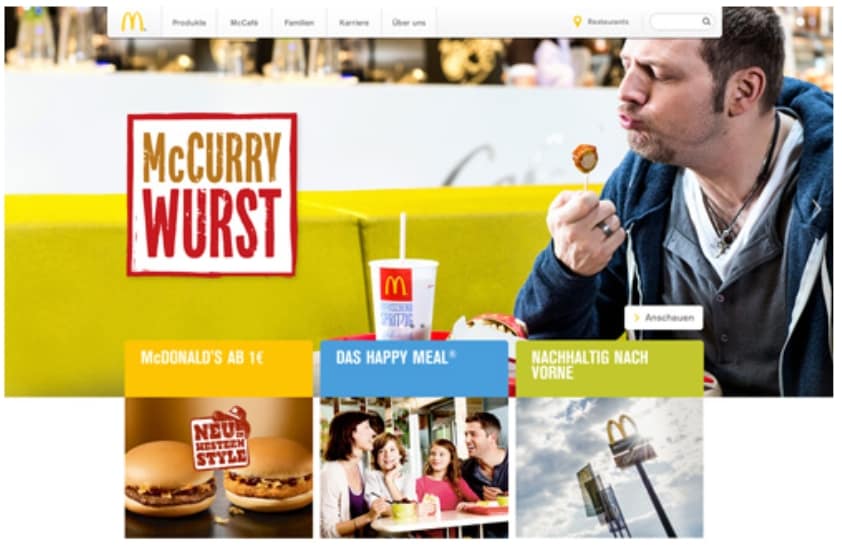
McDonald’s German website shows a customer eating a “McCurrywurst,” a dish heavily influenced by Teutonic culinary tradition. The atmosphere created is therefore very familiar and creates an immediate connection between the user and the product.
It becomes essential to present themes that are already known and established, without trying to come up with novelties related to the future.
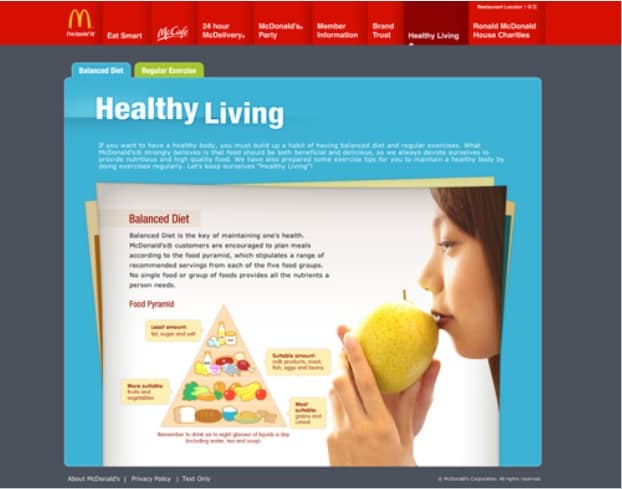
McDonald’s website in Hong Kong urges its users to make forward-looking decisions.
And it is not only about nutrition, but also about lifestyle: the site suggests various methods to have a healthy life.
The site shows great care in informing customers of all the possible benefits of McDonald’s to have -in the long run- a healthy and happy life, thanks to its products.
A sixth point: indulgence
Let us go a little further and analyze a sixth point: that of indulgence.
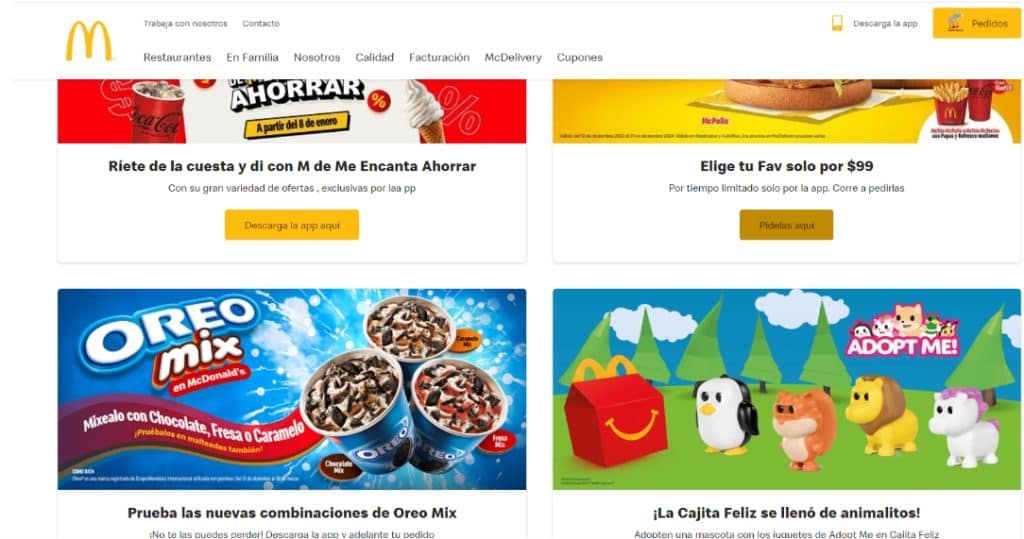
A higher indulgence score indicates that a culture is more amenable toward people’s personal gratification, happiness, and needs. Countries such as Colombia and Mexico are considered “indulgent,” and individuals tend to be optimistic and fulfill their desires.
A more restrictive culture, on the other hand, indicates a culture governed by social norms and rules.
In the case of cultures that are very oriented toward personal gratification, it makes a lot of sense to foreground content related to taste, pleasure, and the fun provided by prizes, toys, and merchandising.
An example of what the Mexican site looks like can be seen here
So? What do we take home?
“ehhhh whatever, but McDonald’s is a colossus, it can afford to have 100 different sites, each optimized on its target audience, doing sociological surveys, etc. etc….. I’m a small business owner who wants to expand his market of selling toothbrushes in 3 or 4 countries, it’s not like I can make 4 different sites!”
No one here is advising you to make 20 versions of your website, with 20 different templates, 20 different graphics, 20 different copy, 20 different sets of images.
What we are talking about is (I will never tire of saying this) “think before you act!” Do you have a country as your goal? Study it. Try to understand its culture, its customs, the language to use and not to use. The business techniques to use and not to use. Then proceed slowly. Make a campaign done right, a single landing page customized for your target audience–and get started, slowly. And gather feedback, always improve.
Don’t make the mistake of thinking that translating a site or a campaign is enough. Maybe this is true for countries that have a very similar culture to yours, but it doesn’t always apply.
The costs involved are those of a potential campaign that does not bring results, those of a series of opportunity costs that fizzle out, those of damage to corporate image. All because of haste or the bad habit of not considering the variables involved by taking everything for granted or reasoning in stereotypes.